
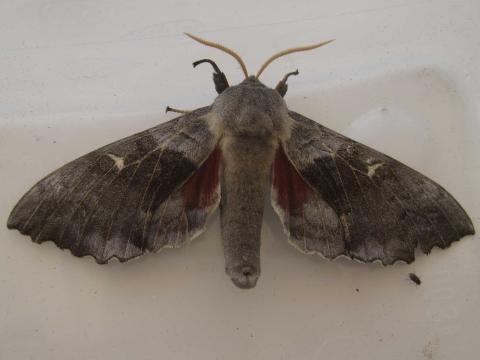
Pollinators come in many shapes and sizes!
A fascinating collection of local moths was on show at the Farm Fun Day in June – all part of Buriton’s new nature initiative.
Three large hawk-moths stole the show but there were some other very attractive and delicate species including those identified as: a Heart & Club moth; Treble Lines; Burnished Brass; Buff Ermine; Dark Arches; Pale Tussock; and an Olive Pearl moth.
The moths had all been caught overnight in the community’s non-harmful moth trap which is now being used by a rota of villagers.
The light-based device attracts moths which are captured in a container, allowing villagers to identify and record the species without causing any harm. All the moths are then released back where they were found.
Amidst concerns about the decline of pollinating insects like bees and butterflies, researchers have discovered that, during the night-time, moths are particularly efficient pollinators – helping our local farms to grow food and look after our landscapes.
Apparently one out of every three bites of our food is created with the help of pollinators.
The Farm Fun Day also displayed a detailed map of Bolinge Hill Farm showing all the special areas that are now devoted to helping pollinators as well as small mammals and birds.
Each species of moth has its own habitat requirements as they generally rely on a food-plant for their caterpillars, a nectar source for adults and suitable conditions for caterpillars to survive and pupate successfully. Some are much fussier than others. Long grasses, bushy places, hedgerows, woodland fringes and domestic gardens can all play a role.
The three large moths which attracted so much attention at the Farm Fun day were:
- a Privet hawk-moth: the largest resident hawk-moth in the country; it flies at night feeding on nectar from highly-scented flowers such as honeysuckle and jasmine.
- a Poplar hawk-moth: the most common hawk-moth in the country which is found wherever its caterpillar food-plants grow, including the leaves of poplar and willow trees.
- an Elephant hawk-moth: unmistakable with its bright pink and green colouring. Adults take nectar at night, particularly from honeysuckle. This moth is named after the trunk-like appearance of its caterpillar’s head which it can retract into its neck.
If you would like to help with this project, please contact the Parish Clerk, Petra Norris, via 07943 536065 or buritonparishcouncil@hotmail.co.uk
In addition, anyone can help moths and butterflies by creating a Wild Space.
